
The 5th C of Diamond Classification
The 5th C of Diamond Classification
February 25, 2026
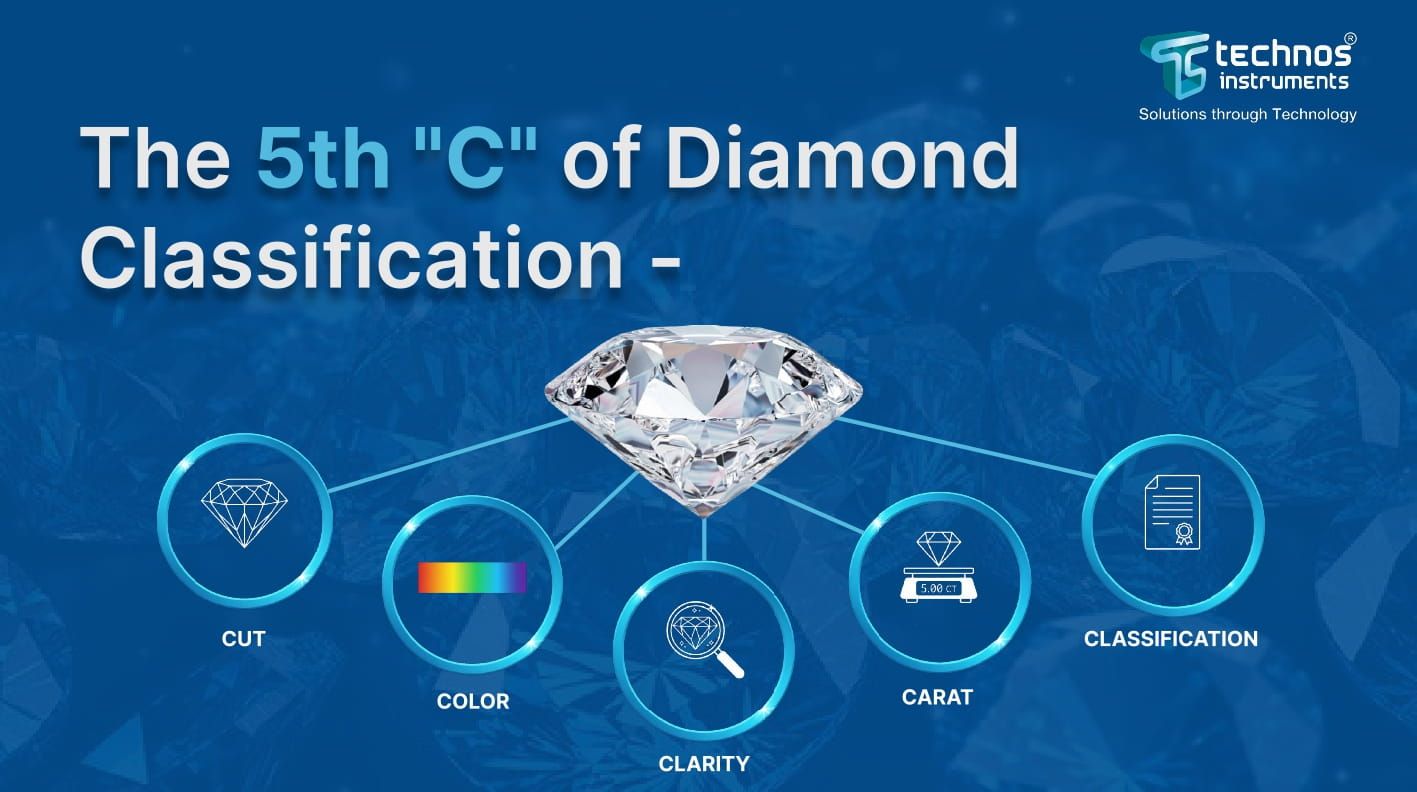
For decades, diamond valuation has been anchored in the renowned "4C" concept Cut, Color, Clarity, and Carat. These four pillars have guided manufacturers, jewelers, traders, and consumers in understanding a diamond's quality and worth.
The Evolution of Diamond Evaluation
The traditional 4Cs have served the industry well, providing a standardized framework for assessing diamonds. But today's market landscape has transformed significantly. The rise of Lab-Grown Diamonds (LGDs) and the increasing sophistication of diamond treatments have introduced new complexities that the original four criteria simply cannot address.
In this new era, knowing what type of diamond you're dealing with is just as important as knowing its cut quality or carat weight. This is where Classification emerges as the essential “5th C", a critical component that protects integrity, ensures transparency, and maintains trust throughout the diamond supply chain.
Why is Diamond Classification Important?
1. Market Transparency and Consumer Confidence -
Today's consumers are more informed and discerning than ever before. They want to know exactly what they're purchasing whether it's a natural diamond, a lab-grown diamond, or a treated stone. Accurate classification provides the transparency that builds and maintains consumer trust. Without proper classification, even the most exquisite diamond loses its credibility in the marketplace.
2. Fair Pricing and Valuation -
Natural diamonds, lab-grown diamonds, and treated diamonds each carry different value propositions and price points. Misclassification whether intentional or accidental can lead to significant financial discrepancies. For manufacturers, traders, and retailers, proper classification ensures fair pricing practices and protects against potential losses or legal complications.
3. Regulatory Compliance and Industry Standards -
Global regulatory bodies and industry organizations have established strict guidelines regarding diamond disclosure and representation. Proper classification helps businesses comply with these regulations, avoiding penalties and maintaining their professional standing in the industry.
4. Supply Chain Integrity -
From mine to market, diamonds pass through multiple hands. Each stakeholder from miners and manufacturers to wholesalers and retailers needs assurance about the nature of the diamonds they're handling. Classification provides a reliable checkpoint that maintains integrity throughout the entire supply chain.
5. Protection Against Fraud -
The sophistication of diamond simulants and synthetic stones has reached unprecedented levels. Some imitations are so convincing that they can deceive even experienced gemologists using traditional testing methods. Advanced classification systems serve as a critical defense against fraud, protecting both businesses and consumers.
The Classification Challenge
The proliferation of Lab-Grown Diamonds has been one of the most significant developments in the industry. These diamonds whether created through Chemical Vapor Deposition (CVD) or High Pressure High Temperature (HPHT) methods possess the same physical, chemical, and optical properties as natural diamonds. This makes them virtually indistinguishable without specialized equipment.
Additionally, various treatment processes can enhance a diamond's appearance from color enhancement to clarity improvement. While these treatments are legitimate when properly disclosed, they significantly affect a diamond's value and must be accurately identified.
The challenge extends beyond natural versus lab-grown. The market also contends with diamond simulants like moissanite and cubic zirconia, which can mimic a diamond's appearance but lack its fundamental properties.
Introducing IndiRAM Advanced Diamond Detection
Recognizing the critical need for reliable classification, TechnoS has developed the IndiRAM Diamond Detection System a cutting-edge solution that addresses the classification challenge head-on.
How IndiRAM Works
IndiRAM leverages advanced spectroscopy techniques combined with unique proprietary algorithms to analyze diamonds at a molecular level. This sophisticated approach enables the system to accurately classify diamonds into distinct categories:
- Natural or Natural Treated: Distinguishing between untreated natural diamonds and those that have undergone enhancement processes.
- CVD or HPHT: Identifying the specific growth method used for lab-grown diamonds.
Diamond or Simulant: Separating genuine diamonds from look-alike materials.
The TechnoS Advantage
What sets IndiRAM apart is its combination of scientific precision and practical usability. The system doesn't just provide a simple yes/no answer it offers comprehensive classification data that empowers stakeholders to make informed decisions and interestingly in just ~ 10 seconds with > 98% conformity and with almost negligible cost per sample.
For diamond manufacturers, IndiRAM ensures quality control and accurate inventory management. For traders and wholesalers, it provides the verification needed for confident transactions in realtime. For retailers and jewelers, it offers the assurance they need to stand behind their products with complete certainty.
The Future of Diamond Evaluation
As the diamond industry continues to evolve, the 5th "C" of Classification will only grow in importance. The distinction between different diamond types isn't about declaring one superior to another natural diamonds, lab-grown diamonds, and treated stones all have their place in the market. What matters is accurate representation and transparent disclosure.
The integration of advanced classification systems like IndiRAM represents a new standard in diamond authentication. It's a recognition that in today's complex marketplace, comprehensive evaluation requires more than traditional gemological assessment, it demands scientific precision and technological innovation.
Conclusion
The 5th "C" Classification has become an indispensable element of diamond valuation. For manufacturers, jewelers, traders, and consumers alike, understanding what type of diamond you're dealing with is fundamental to making sound business decisions and purchases. As technology advances and the diamond market continues to diversify, systems like TechnoS's IndiRAM Diamond Detection System will play an increasingly vital role in maintaining industry integrity, protecting stakeholder interests, and ensuring consumer confidence.
The 4Cs will always remain important for assessing a diamond's beauty and quality. But in the modern diamond industry, the 5th "C" of Classification has become the essential foundation upon which all other evaluations rest. Without it, even the most perfectly cut, colorless, flawless diamond of significant carat weight cannot be properly valued or trusted in today's marketplace.
Related Articles
- Gemstone Identification with Raman Spectroscopy
- IndiRAM Raman Spectrometer for identification of Excipients in Pharmaceutical Drugs
- Raman Spectrometer Principle and Core Components
- How Raman Spectroscopy is Advancing Battery Material Analysis
- Raman Spectroscopy for Critical Minerals and Rare Earth Elements (REEs) - Cu
- Real-Time Explosive Trace Detection with IndiRAM Raman Spectrometer