
Raman Spectroscopy for Illicit Drug Detection
Raman Spectroscopy for Illicit Drug Detection
April 26, 2025
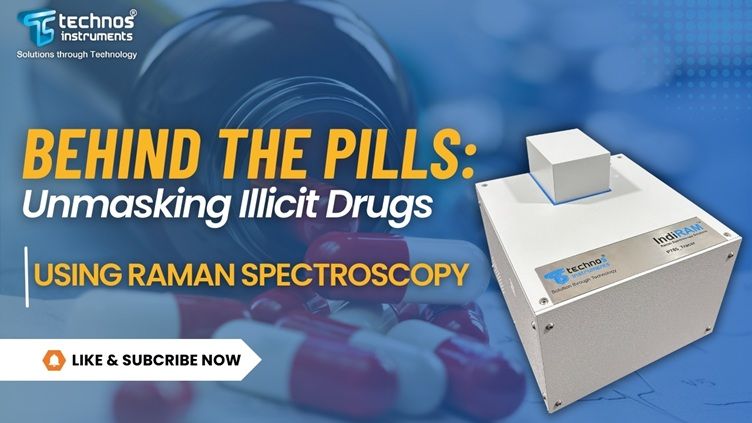
Behind the Pills Identifier: Raman Spectroscopy for Illicit Drug Detection
Raman spectroscopy is a non-destructive, optical technique that identifies chemical substances by analyzing their molecular vibrations. Ideal for field use, it allows rapid, on-site detection of active ingredients and excipients in illicit drugs by comparing spectral fingerprints to a reference database making it a powerful tool in forensic and drug enforcement settings.
APIs and Excipients: What Are We Looking For?
Every drug - legal or illegal contains two major types of ingredients:
Active Pharmaceutical Ingredient (API):
- The API is the main ingredient in a medicine or drug that produces the intended therapeutic effect.
- In the context of illicit drugs, the API is the psychoactive compound responsible for the drug's effect on the body or brain.
API is like the "engine" of the drug – it does the actual work.
Excipients
Excipients are the inactive ingredients in a drug formulation.
- They are added to support the delivery, stability, appearance, or taste of the API.
- In illicit drugs, excipients are often used as cutting agents to bulk up the product, increasing profits and altering the drug’s effect or appearance.
- Excipients are like the "car body" – they support or carry the engine (API), but they don't drive the vehicle themselves.
Illicit manufacturers often mix APIs with cheap excipients to increase profits, which can affect the potency and pose health risks. Identifying both API and excipients helps forensic analysts understand the composition, source, and potential toxicity of a drug sample.
Common APIs vs. Excipients in Illicit Drugs

The Growing Threat of Novel Benzodiazepines
The illicit drug market has seen a surge in novel synthetic benzodiazepines, which mimic the calming effects of prescription tranquilizers like Alprazolam (Xanax) but can be significantly more potent and carry a heightened risk of dependence, overdose, and adverse reactions. These substances are often found as powders, tablets, or liquids and are frequently mixed with other psychoactive compounds, including illicit opioids and nitazenes. The variable potency and unpredictable composition of these drugs often disguised as branded prescription drugs—pose a serious public health risk, especially when they are consumed unknowingly.
Etizolam and Alprazolam: A Case in Point
A prominent example from the "Fake Xanax" review is Etizolam, a thienodiazepine derivative with anxiolytic effects closely resembling those of Alprazolam. Although Alprazolam is a widely prescribed and regulated medication, Etizolam is not approved for medical use in countries like the USA. Despite this, counterfeit Xanax tablets commonly contain varying and unregulated doses of Etizolam, misleading consumers and increasing the risk of overdose. Handheld Raman spectrometers like the IndiRAM H1064_Tracer has proven effective in detecting both Etizolam and Alprazolam, making it a vital tool in distinguishing authentic pharmaceuticals from dangerous counterfeits—especially in forensic, customs, and law enforcement applications.

Benefits of Raman Spectroscopy for Illicit Drug Identification
Non-destructive analysis: Samples can be identified without opening packaging, reducing the risk of contamination and exposure.
- Identification through barriers: Allows for analysis through various concealing materials.
- Rapid results: Handheld devices like the IndiRAM H1064_Tracer provide fast, direct identification.
- Wide range of detectable substances: Spectral libraries are continuously updated to include new psychoactive substances, including a growing number of benzodiazepines.
- Enhanced safety for law enforcement: Minimizes direct contact with potentially hazardous materials.
Real Life Applications
Border control: Inspecting suspicious powders, pills, or vials at customs.
Police raids: On-the-spot drug identification during busts.
Prison security: Detecting smuggled contraband in sealed packaging.
Hospital ERs: Rapid identification of unknown drugs ingested by patients.
Conclusion
With the rise of synthetic and counterfeit drugs, fast and accurate identification is critical. Raman spectroscopy offers a non-destructive, portable solution that identifies both APIs and excipients even through sealed packaging. Devices like the IndiRAM H1064_Tracer by TechnoS Instruments, Jaipur, India bring this power to the field, enabling law enforcement and forensic teams to detect dangerous substances in seconds. The Etizolam vs. Alprazolam case highlights how Raman cuts through deception making it a vital tool in today’s fight against illicit drugs.
Related Articles
- Quartz Identification Using Raman Spectroscopy
- Field Testing Simplified: Benefits of Portable Raman Spectrometers
- IndiRAM Raman Spectrometer for identification of Excipients in Pharmaceutical Drugs
- Innovations in Raman Spectroscopy: TechnoS at the Forefront
- Microplastic Contamination Detection in Food Grains: A Raman Spectroscopy Approach
- Powering the Future: How Raman Spectroscopy is Advancing Battery Material Analysis
- Principle of Raman Spectroscopy & Core Components
- Raman Spectroscopy: A Transformative Tool Across Science, Industry, and Society